By Dr. Susan Eisen DC. Originally published on Substack on September 19, 2026.
What’s really in your insect repellent? Or maybe the better question is are you even using an insect repellent? And are they all the same? Are the chemical (synthetic) sprays better? Are they really safe? Are the natural repellents as good? Do they really work? Are all natural repellents the same? These are lots of questions to sift through and I will attempt to answer all of them with a deep dive into the “chemistry” of insect repellents.
The first question you might have is Why do I even need to use an insect repellent? Aren’t they poisonous? The simple answer here is it is what is in the formula of your insect repellent that factors into a potential toxicity. Not all formulas are identical and not all sprays contain the same ingredients.
First, we have the synthetic chemical brands that we all know of that contain DEET or permethrin and picaridin; all synthetically derived and all potentially hazardous.
The second part of this involves the why. With the increase of temperatures on our planet, the need for a safe, reliable bug spray has become as essential as having a toothbrush or a hairbrush or soap in your daily hygiene. Vector borne tropical diseases (from bug bites) are exploding as well as other infectious diseases that have been around for millennia. Simply put, there are more bugs carrying disease producing pathogens.
With this we have seen an increase in natural repellents as well as an increased push by the CDC to use synthetic chemical repellents. All said, it is good that people are beginning to understand the need for protection as a simple bug bite can now cost you the quality of your life for an undetermined amount of time.
This led us to wonder. What’s really in your insect repellent? Is is safe? Is it effective?
The active ingredients in most chemical bug sprays are DEET, permethrin and picaridin. We are told that these synthetic chemicals are long lasting (8-12 hours) and are therefore the best. The question to be answered here… are they really safe? DEET is a strong neurotoxin. Permethrin is a known human carcinogen. Do we really want to be putting these harmful ingredients on our skin and on our pets during the hot summer months when everything melts in our sweat and gets into our eyes and mouths and our pets eyes and mouths? The increase in cancer and seizures in our dogs has been steadily increasing year after year.
From Consumer Reports: “Permethrin disrupts the endocrine system and should not be inhaled. Applying it to the skin is safe when treating temporary conditions such as scabies, but it should not be applied repeatedly, such as to prevent mosquito or tick bites.”
Permethrin is the main ingredient in NIX shampoo for lice. The instructions specifically state not to use it more than one time, so why is it okay to use it several times daily in our insect repellents?
Now let’s discuss natural repellents. They are often essential oils in a carrier oil base. Like food, it’s important to consider the quality of ingredients in personal care products and insect repellents are no exception to this rule. Organic and nonGMO are important considerations .
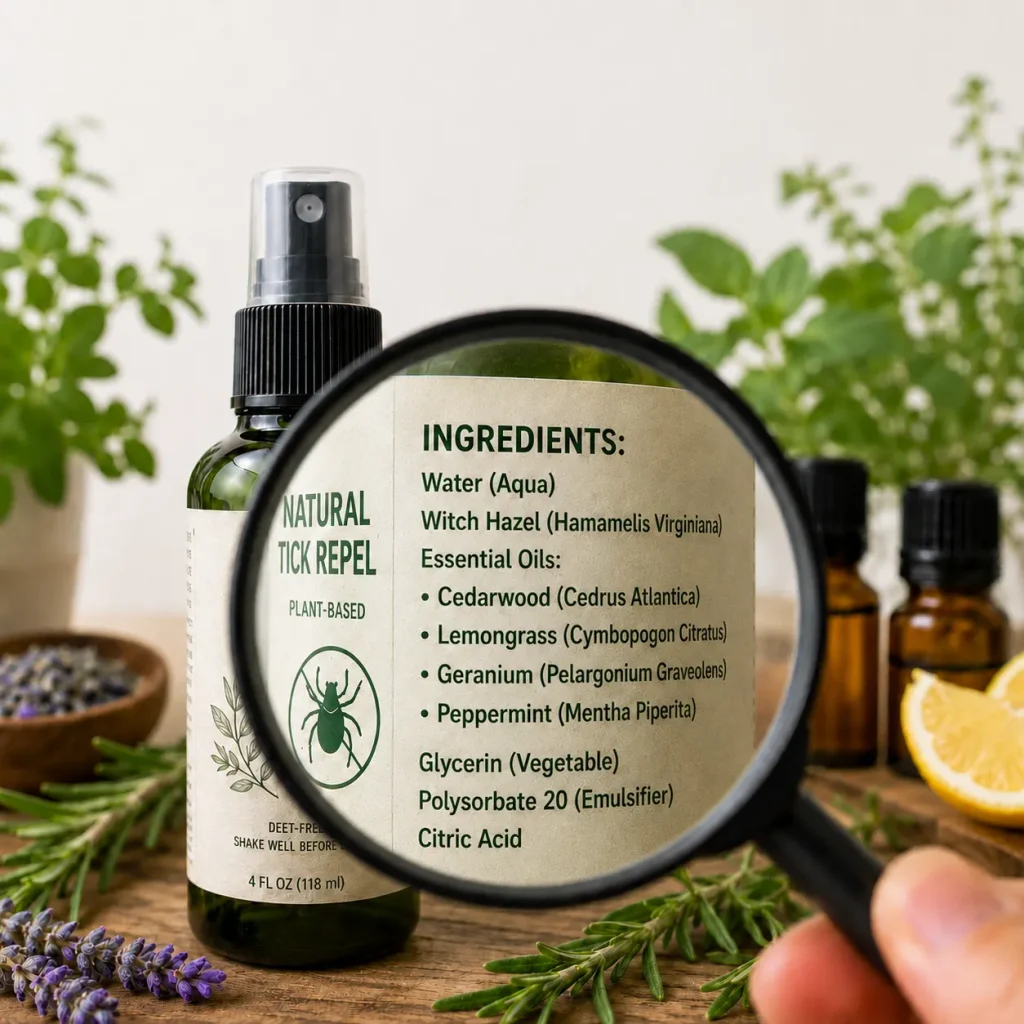
Most natural repellents claim to be waterproof which sounds like a good thing. The problem is that in order to make the mixture work, alcohol, witch hazel or other additives must be incorporated that often reduces the effectiveness to 30-90 minutes per application depending on the brand. While waterproof sounds great, it’s less effective and doesn’t last as long.
A non waterproof insect repellent can be a better option because it doesn’t require any added ingredients to blend all ingredients and the bioactivity of the active aromatic essential oils remains intact thus lasting much longer than the waterproof repellents. Look for products that are 100% oil based without drying agents. There are very few brands on the market. One such brand is Tick Tock Naturals which was specifically formulated to be hydrophilic.
Tick season is here though it is now year round concern, and each season is getting more intense so it’s essential to protect yourself. Be careful with the products you put on your skin and make sure to research brands beyond supermarket shelves.